Attention Crocheters Who Keep Hearing "You Should Sell These…"
Turn Your Hobby into Real Number You Can Defend

Without becoming an influencer, filming a single video, or building a following before you build a price
30-day guarantee: if the pricing formula doesn't change how you price your next listing, I'll refund it. No questions.
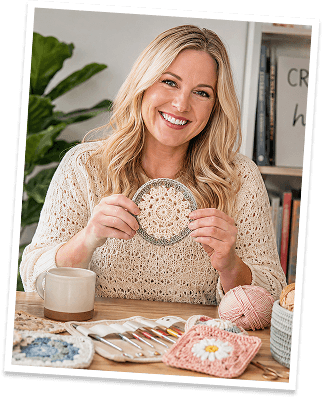
My name is Carla Mossberger.
I live in Terre Haute, Indiana. I’ve been a pharmacy technician at the same Walgreens for eleven years.
I also had a king-size ripple blanket sitting in my Etsy shop for four months before I realized I wasn’t profiting from it.
Not because I wasn’t good at it. I later discovered I was running a business with no pricing formula, the wrong product mix, and 190 past buyers I’d never once contacted.
Thirty-one hours of work. Listed at $140. I divided the profit by the hours one January night at my kitchen table. The number that came out was $3.11 an hour.
I fixed those three things one at a time. By month twenty-two, the shop was earning $2,100 a month, split between finished goods and digital patterns. No employees. No following. No video content.
This book is everything I worked out between that $3.11 number and the shop running today.
What You Get
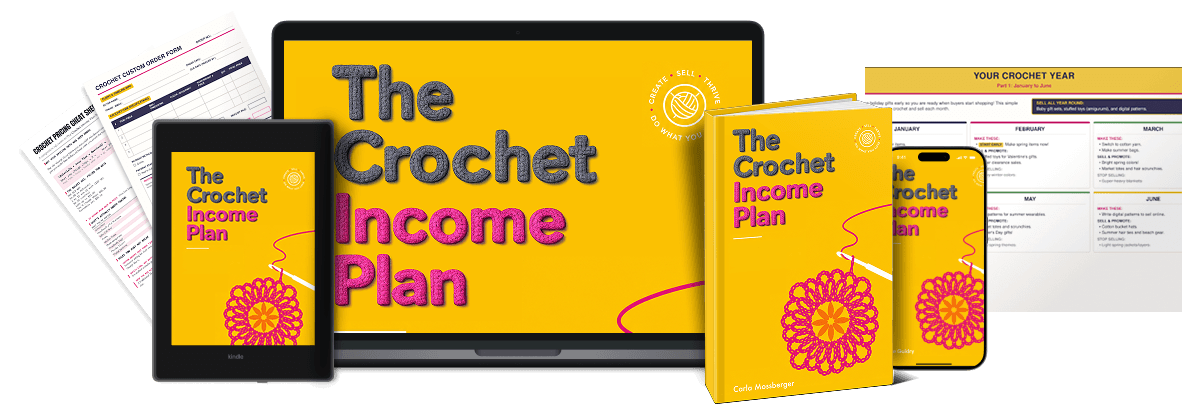
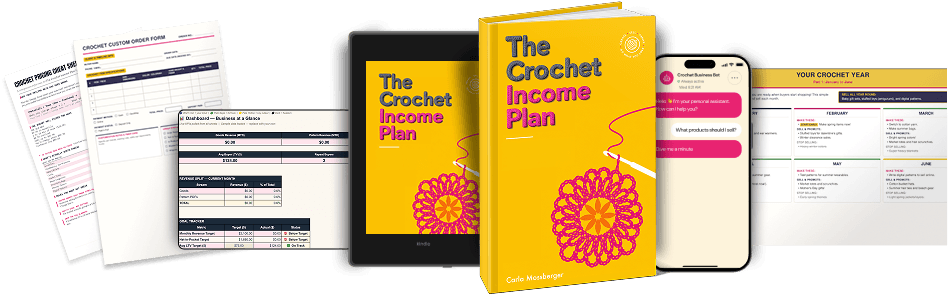
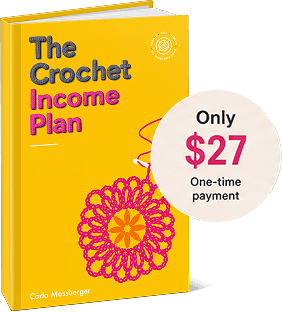
Here’s exactly what comes with The Crochet Income Plan for $27:
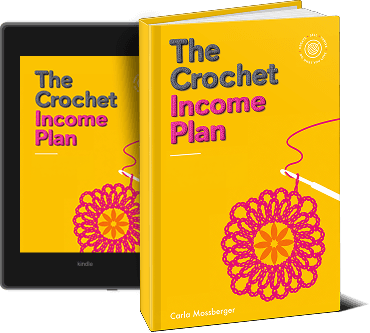
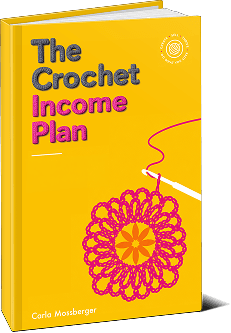
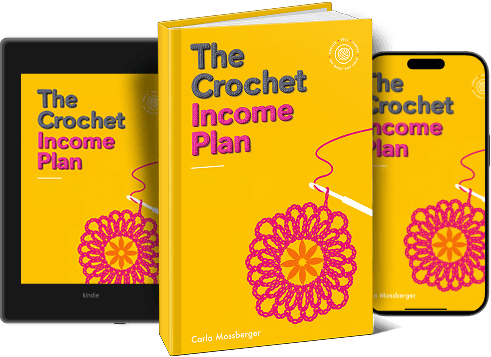
The eBook: The Crochet Income Plan
100 pages covering product selection, the pricing formula, Etsy setup, Pinterest traffic, the first 30 days, repeat-buyer systems, and pattern licensing. Every chapter ends with one specific action to take before opening the next one. ($27)
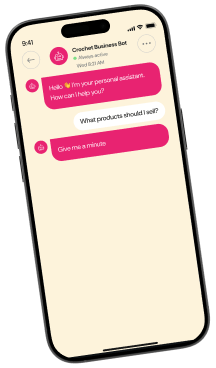
Your Personal Crochet Business Advisor
Trained on the pricing formula and product framework in this book. When you hit a question between chapters, this is where you go. ($27)
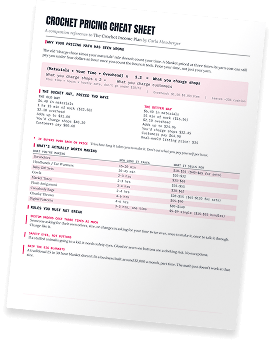
The Crochet Pricing Cheat Sheet
The one-page version of the Profit-Minded formula from Chapter 4. Fill in your materials cost and your time. It tells you the wholesale number and the retail number. You stop guessing the same day. ($17)
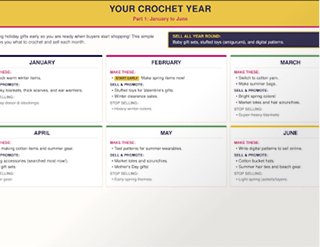
The Seasonal Sales Calendar
The one-page version of the Profit-Minded formula from Chapter 4. Fill in your materials cost and your time. It tells you the wholesale number and the retail number. You stop guessing the same day. ($17)
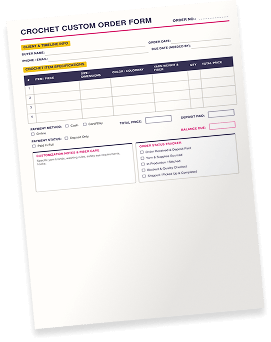
The Custom Order Form
The one-page version of the Profit-Minded formula from Chapter 4. Fill in your materials cost and your time. It tells you the wholesale number and the retail number. You stop guessing the same day. ($17)
30-day guarantee: if the pricing formula doesn't change how you price your next listing, I'll refund it. No questions.
The Skill Isn't the Problem
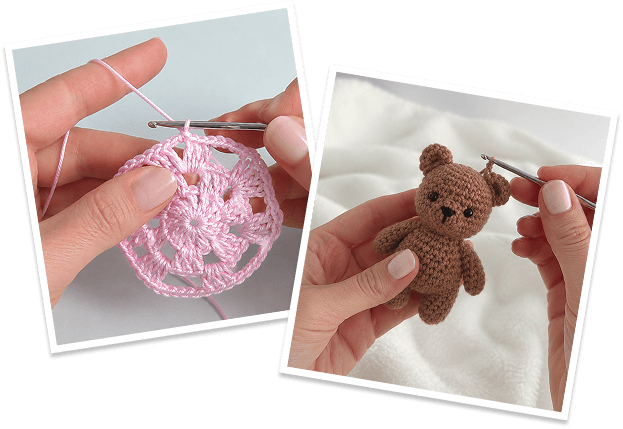
If you’ve been making hats, totes, scrunchies, and cowls that people keep telling you to sell, you already have what you need.
Bucket hats. Market totes. Scrunchie sets. Cowls. Baby gift sets.
These are five of the products that sell consistently on Etsy.
The $3.11 number taught me the problem.
January 2022. I’m at the kitchen table in Terre Haute with a legal pad and a calculator.
The king-size ripple blanket I’d spent thirty-one hours on was still sitting in my Etsy shop with zero sales. So I did the math I’d been avoiding. Materials: $38. Fees and shipping: about $14. Net: $88. Divided by thirty-one hours.
$3.11 an hour.
That bothered me more than if I’d guessed the price wrong. I hadn’t guessed wrong. I’d guessed without a formula at all, and the blanket happened to be the product that exposed it.
Here's why most crocheters stay stuck.
The craft layer is overcovered. Thousands of tutorials cover stitches, tension, and finishing. The business layer is what’s missing.
Most crocheters underprice because they use a materials-only rule. They count the yarn and stop there. They forget the labor hour that actually costs the most.
Most crocheters keep blankets in the shop as prestige items without running the labor math. A 25-hour afghan at $150 nets less per hour than a part-time retail shift.
Most crocheters build an email list of past buyers and never follow up with them. I had 190 people who’d already bought from me and I’d never once reached out. That cost me $798 in recoverable revenue I’d been leaving in the ground for two years.
What the Book Actually Shows You
This book is the Crochet Business Operating System. Eleven chapters, in order: the two crochet businesses, the saturation lie, product selection, the pricing formula, Etsy setup, Pinterest traffic, the first 30 days, the 190-buyer system, pattern licensing, an honest year-one timeline, and what to do next. Each piece builds on the one before it. That sequence is what turns an Etsy shop with six quiet listings into a real number every month.
- A pricing formula that doesn’t leave money behind.
Materials plus labor plus overhead, times a margin multiplier, doubled for retail. Chapter 4 walks the math through on a real $34 bucket hat. - A product list where the labor math actually works.
Eight to twelve products, ordered by time-to-make and price range, with the one blanket exception that still pencils out. Chapter 3 is the full list. - Etsy listings buyers actually find.
Buyer-intent titles instead of maker-intent titles, all thirteen tags filled, photography that doesn’t read yellow under kitchen light. Chapter 5 rebuilds the listing from the ground up. - A repeat-buyer system that turns past customers into a list.
A three-email sequence and a quarterly drop model, built from a real 190-buyer list. Chapter 8 is the one most sellers skip and shouldn’t. - A second income layer from work you’ve already done.
Pattern PDFs and digital guides, sold from designs already in your shop. Chapter 9 covers it in full.
30-day guarantee: if the pricing formula doesn't change how you price your next listing, I'll refund it. No questions.
The Numbers, Straight
I earn $2,100 a month, split between finished goods and digital patterns, working evenings and three-hour gym waits while my kid runs AAU basketball circuits.
That’s the steady state. It took about two years to get there, and it wasn’t a straight line.
Month one ran $47. By month six, I was near $820. Month nine dipped to $340. That dip is real and it’s covered in the book. By month eleven, I was at $1,100. Month twelve closed at $1,200 with pattern income starting to compound.
The book shows you what each quarter actually looks like, so a slow month doesn’t read as a verdict.
Earnings note: The $2,100/month figure is Carla’s own result from her shop after the system was built. It took about two years. It’s not a guarantee. Your results depend on your products, pricing, consistency, market, and follow-through.
Pricing is where I lost the most money.
Most crocheters use a three-times-materials rule and stop. They count the yarn. They forget the labor hour that actually costs the most.
In the book, I use this formula:
(Materials + Labor + Overhead)
x Margin Multiplier
= Wholesale Price
Wholesale Price x 2 = Retail Price
Run on a real bucket hat, the formula lands at $34 for a new shop building reviews. A pattern PDF for the same hat lands around $7 to $9 once the shop has an established review count.
bucket hat
$34.00
pattern PDF
$7.00 to $9.00
The first time you run it, it feels slower than guessing. After that, it gives you a number you can post without flinching.
30-day guarantee: if the pricing formula doesn't change how you price your next listing, I'll refund it. No questions.
The first 30 days need a track to run on.
I started my first launch by sitting down and crocheting. By day eight, I was out of the cotton yarn the totes needed. Nine days before the restock arrived. I lost the production rhythm completely. That month ended with four listings instead of six.
The sequence I use now:
Source and Plan → Produce and List
→ Launch & Capture
Materials ordered before the production clock starts. Listings written in batches. Pins scheduled on a fixed cadence. When the order is the same every time, the launch gets calmer. That’s how the first month becomes a system instead of a scramble.
Buyers matter more than followers.
I won’t teach you to become a content creator.
The line that changed how I looked at my own buyer list: the most expensive customer acquisition event is the first one. The buyer who’s already purchased once already trusts you.
I had 190 people who had bought from me more than once and never heard from me again. I sent a bundle offer that weekend. No ads. No new products. Just the first email I’d ever sent.
My repeat purchase rate before that email: 6 percent. After a three-email sequence: 23 percent. Same shop. Same products. Different follow-up.
A buyer who bought a baby gift set may need another for a coworker’s shower. A buyer who bought one market tote may want it in a second color.
Most crocheters finish the sale and disappear. I show you how to follow up with your buyers properly.
30-day guarantee: if the pricing formula doesn't change how you price your next listing, I'll refund it. No questions.
Patterns can be better than another finished piece.
The highest-return work I do doesn’t start with new yarn.
I’d sold the same cotton bucket hat as a finished piece for over a year. One Tuesday afternoon, I photographed it, wrote up the instructions, and listed the pattern as a $4 PDF. It earned $310 in the first two months. I bought no yarn to make it.
Fourteen more designs in my shop had the same potential. I hadn’t thought of them as a second income stream until that first pattern sale landed.
That’s the layer most crocheters skip. It pays for the yarn, then the upgrades, then the next thing the shop needs.
30-day guarantee: if the pricing formula doesn't change how you price your next listing, I'll refund it. No questions.
Why $27
Because the information here used to require finding it the slow way: two years of trial and error, a $3.11 lesson, and a stranger’s interview at 11 p.m. on a Tuesday.
This book is the starting point. Every chapter is a decision you need to make before the next one makes sense.
Follow it in order. The work follows. The income follows.
Every month your shop sits at six quiet listings is a buyer who found someone else’s bucket hat instead. The skill is already yours.
30-day guarantee: if the pricing formula doesn't change how you price your next listing, I'll refund it. No questions.
Inside the Book You'll Learn:
- Why most crocheters don’t get paid correctly
- Which eight to twelve products to make instead of full-size blankets
- How to run the pricing formula before you list a single item
- Why "11,000 results" on Etsy isn't the saturation signal it looks like
- How to write Etsy listings around what buyers actually type
- How to photograph products without a studio or a $400 camera
- How to run the first 30 days without losing the launch window
- Why repeat buyers matter more than followers, and how to reach them
- How to turn a design you already know into a second income stream
- What an honest year-one income trajectory actually looks like, quarter by quarter
Disclaimer: [INSERT CURRENT DISCLAIMER IF NEEDED — e.g. pattern copyright/DMCA basics note, if covered in final manuscript scope]
30-day guarantee: if the pricing formula doesn't change how you price your next listing, I'll refund it. No questions.
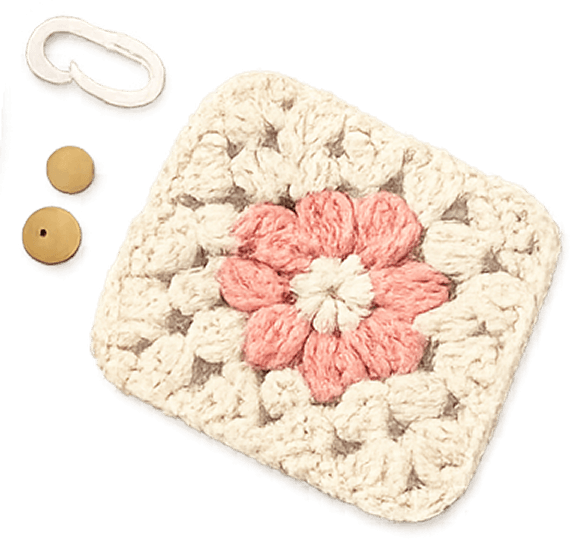
The Same Kitchen Table, a Different Number
I’m writing most of this from the same spare bedroom where the yarn baskets still sit behind my chair. Four sales today. One pattern download. A tote going out with a note on it that says it’s for someone’s birthday.
You already know how to crochet. You’ve been done with that part for a while. What’s left is getting one listing up and pricing it right.
Because if you don’t, that blanket will still sit at 23 views for another four months. And six months from now somebody’s still going to tell you “you should sell these,” and you’ll still be doing the math in your head instead of running the formula.
So the only real question left is whether your next listing has a real profitable number behind it that you actually believe in.
30-day guarantee: if the pricing formula doesn't change how you price your next listing, I'll refund it. No questions.
Earnings note: The $2,100/month figure is Carla’s own result from her shop after the system was built. It took about two years. It’s not a guarantee. Your results depend on your products, pricing, consistency, market, and follow-through.
1. Your Info
Your Order Info
2. Payment
Your Payment Details
You’ll get an order confirmation and download link by email.
What’s Included
- The Crochet Income Plan Book
- The Crochet Pricing Cheat Sheet
- The Seasonal Craft Calendar
- The Custom Order Form
- Your Personal Crochet Business Advisor